
You are halfway through a page when you realise you have no idea what the first paragraph said. You reach the end of a document and cannot articulate its main argument. You read an email three times and still feel uncertain about what it is asking. These experiences are not signs of poor concentration or low intelligence. They are the predictable consequences of a brain resource called working memory operating at or beyond its capacity. Understanding how working memory works changes the way you approach reading, studying and information processing more broadly.
What working memory actually is
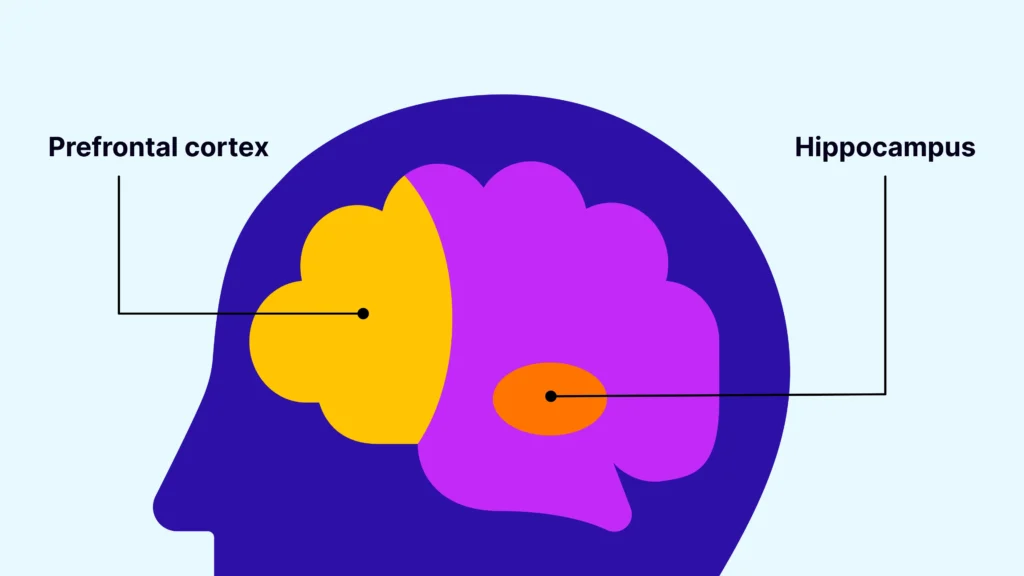
Working memory is the cognitive system that holds and manipulates information in the short term, while it is actively being used. It is distinct from long-term memory, where knowledge is stored durably. Think of working memory as a mental whiteboard: information can be placed on it, moved around and combined, but the whiteboard is small and gets erased quickly. The capacity of working memory is limited to roughly four to seven items for most adults, and its duration without rehearsal is measured in seconds.
When you read, working memory is doing several things simultaneously: parsing sentence structure, holding the meaning of earlier clauses while processing later ones, connecting the current sentence to earlier parts of the text, and maintaining awareness of the overall topic. Each of these operations consumes a share of the whiteboard. When the demands exceed capacity, something falls off. Usually it is earlier content, which is why the beginning of a long paragraph is often forgotten by the time you reach its end.
What overloads working memory during reading
Several factors accelerate working memory overload. Sentence complexity is one of the most significant: dense academic or legal prose, full of embedded clauses and abstract nouns, consumes more working memory than plain conversational writing conveying the same content. Unfamiliar vocabulary adds to the load, because unfamiliar words require conscious decoding rather than automatic recognition. Lack of text structure is another major factor: when headings and logical flow are absent, the brain must construct its own organisational framework on the fly, consuming resources that would otherwise be available for comprehension.
This is why the same reader who handles a well-structured business email effortlessly can struggle with an equally long but poorly formatted contract. The difference is not the content. It is the cognitive cost of accessing that content. Resources on cognitive accessibility in text processing address exactly this distinction between information that is available and information that is genuinely accessible.
Strategies that reduce working memory load
The single most effective strategy is reducing the volume before engaging with the content. A two-paragraph summary of a twenty-page document does not give you everything, but it gives the brain a scaffold: a set of key ideas that can then be confirmed, extended and nuanced during the full read without the cognitive cost of building that framework from scratch.
Breaking reading into shorter segments with deliberate pauses also helps significantly. Each pause allows the working memory whiteboard to consolidate what has been processed before the next section begins. Reading continuously without pause, especially under time pressure, is one of the most reliable ways to ensure that content is traversed but not retained.
The relationship between working memory and text format
Designers of documents, slides and reports have more influence over their readers’ working memory load than they typically realise. Short sentences reduce parsing cost. Active voice reduces the effort of identifying who does what. Concrete nouns are processed faster than abstract ones. Consistent structure allows the brain to develop a template for the text early and apply it automatically, freeing working memory for content rather than navigation. A read-aloud function that highlights each sentence in real time can also reduce load substantially by externalising the tracking task: the reader no longer needs to maintain their position in the text consciously.
Why this matters beyond the reading context
Working memory is not only a reading resource. It is the cognitive infrastructure for all complex thought: reasoning, planning, mental arithmetic, and following multi-step instructions. Anything that depletes it during reading leaves fewer resources for the thinking that reading is supposed to support. Protecting working memory capacity during reading, by choosing better-formatted texts, using reduction strategies and reading in focused sessions rather than fragmented ones, is not just good reading practice. It is good cognitive practice in the broadest sense.