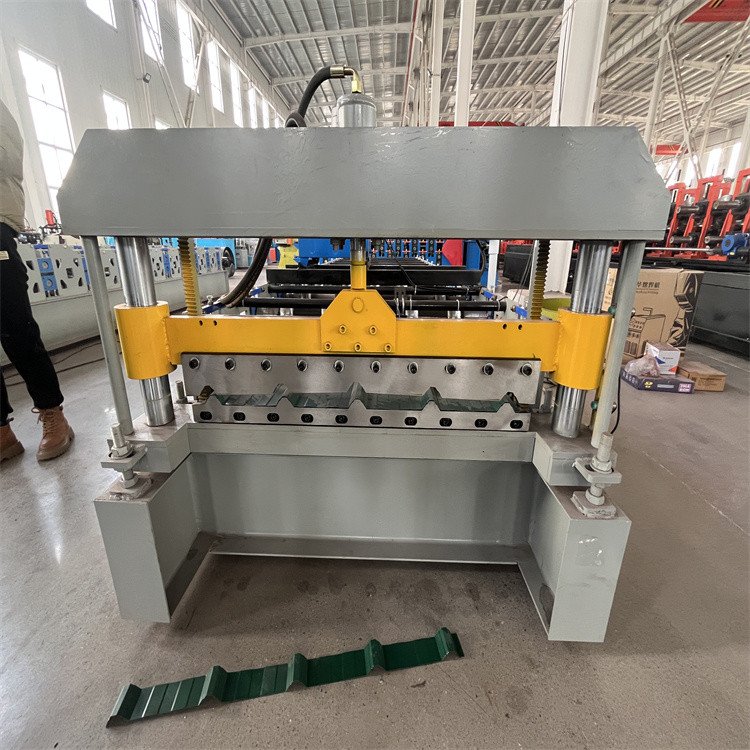

The roofing industry continues to grow as construction projects demand durable, affordable, and high-quality roofing materials. From residential buildings and commercial facilities to industrial warehouses and agricultural structures, metal roofing sheets have become a popular choice because of their strength, versatility, and long service life. To meet this growing demand, manufacturers are investing in advanced roofing sheet production equipment. However, selecting the right machinery requires careful consideration of several important factors. Understanding the key features of roofing sheet roll forming machines can help businesses make informed investment decisions, improve production efficiency, and achieve consistent product quality.
Understanding Roofing Sheet Roll Forming Machines
Roofing sheet roll forming machines are specialized industrial systems designed to transform flat metal coils into shaped roofing panels. The process involves feeding metal sheets through a series of precisely arranged rollers that gradually create the desired profile. These machines can manufacture different roofing designs, including corrugated sheets, trapezoidal panels, and other customized profiles.
Modern equipment combines mechanical engineering, automated controls, and precision manufacturing technology to deliver reliable results. Businesses can select machines according to their production requirements, material specifications, and preferred roofing profiles.
Before purchasing equipment, it is important to understand how its capabilities align with current and future business objectives.
Production Capacity and Operating Speed
Production capacity is one of the most important features to evaluate when investing in roofing sheet manufacturing equipment. A machine should provide sufficient output to meet customer demand without creating unnecessary operational expenses.
Manufacturers should examine the machine’s operating speed, processing capacity, and ability to maintain consistent performance during extended production periods. High-speed equipment can increase productivity, particularly for businesses handling large construction projects or wholesale orders.
However, maximum speed should not be the only deciding factor. A machine must maintain accurate dimensions and reliable forming quality while operating at higher speeds. Investing in equipment with an appropriate balance between production capacity and product quality can support long-term profitability.
Material Compatibility and Thickness Range
Different roofing applications require different metal materials and thicknesses. Common options include galvanized steel, pre-painted steel, aluminum, and other suitable metal coils.
When comparing roofing sheet roll forming machines, businesses should check which materials the equipment can process effectively. The machine should also support the thickness range required by the company’s target market.
Material compatibility affects the quality, strength, and appearance of finished roofing panels. Equipment designed to handle multiple material specifications gives manufacturers greater flexibility when responding to changing customer requirements.
It is also important to confirm that the rollers, shafts, and other forming components are suitable for the intended materials. This helps reduce unnecessary wear and maintain consistent production results.
Precision and Product Quality
Product accuracy directly influences customer satisfaction and the reputation of a roofing sheet manufacturer. Poorly formed panels can create installation difficulties, uneven connections, and material wastage.
A high-quality roll forming machine should feature accurately manufactured rollers, stable shafts, and a reliable alignment system. These components work together to maintain consistent sheet dimensions and profile shapes throughout the production process.
Precision becomes especially important when producing roofing sheets in large quantities. Even minor dimensional variations can create problems during installation.
Investing in equipment with advanced forming technology helps businesses achieve uniform products, minimize defects, and maintain professional manufacturing standards.
Automation and Control Systems
Automation has become an essential feature of modern metal forming equipment. Advanced roofing sheet roll forming machines often include programmable logic controllers (PLCs), touchscreen interfaces, and automatic production settings.
These systems allow operators to adjust production parameters, control cutting lengths, and monitor machine performance more conveniently.
Automated controls can also reduce dependence on manual operations, helping businesses improve productivity and minimize human error. Operators can enter the required sheet dimensions into the control system, allowing the equipment to produce panels according to specified measurements.
When evaluating automation features, manufacturers should consider how easy the control system is to operate. A user-friendly interface, clear instructions, and accessible settings can simplify employee training and daily production management.
Cutting System and Length Accuracy
The cutting mechanism is another important component to examine before purchasing roll forming equipment. It determines how finished roofing panels are separated at the required lengths.
Hydraulic cutting systems are commonly used because they provide controlled cutting operations and can handle demanding production requirements. Some machines also incorporate automatic cutting systems connected to the main control panel.
Accurate cutting helps reduce material waste and ensures that roofing sheets meet customer specifications. Manufacturers should evaluate cutting speed, blade durability, maintenance requirements, and cutting precision.
The cutting system should also operate smoothly without damaging the sheet surface or affecting the finished profile.
Machine Structure and Build Quality
The structural design of a roll forming machine has a significant impact on its durability and operating stability. Heavy-duty frames, quality steel components, and properly engineered support structures help equipment withstand continuous industrial use.
A strong machine structure reduces unwanted vibration during production and supports accurate roller alignment. These characteristics are particularly important for businesses planning to operate equipment for multiple shifts.
Manufacturers should inspect the frame construction, roller materials, shaft strength, and overall assembly quality. They should also ask about the expected service life of major components.
Choosing a machine with reliable construction can reduce repair expenses, improve operational consistency, and provide better value over time.
Energy Efficiency and Operating Costs
Initial purchase price is only one part of the total investment. Businesses must also consider electricity consumption, maintenance expenses, labor requirements, and replacement components.
Energy-efficient motors and optimized transmission systems can help reduce operating costs. Modern equipment may also include improved hydraulic and electrical systems designed to support efficient production.
Before making a purchase, manufacturers should estimate the machine’s daily energy requirements and compare them with expected production output.
A machine with a slightly higher initial price may provide greater long-term value if it consumes less energy, produces fewer defective sheets, and requires less frequent maintenance.
Safety Features and Operator Protection
Industrial machinery must provide suitable safety measures to protect employees during production. Roofing sheet roll forming machines contain moving rollers, cutting mechanisms, and electrical components that require careful handling.
Important safety features may include emergency stop buttons, protective guards, electrical protection systems, and clearly identified operating controls.
Businesses should also evaluate the accessibility of emergency controls and the overall safety of the machine layout.
Employee training is equally important. Operators should understand the correct operating procedures, maintenance requirements, and emergency response measures before using the equipment.
A safe working environment reduces accident risks and supports smoother manufacturing operations.
Maintenance Requirements and Technical Support
Regular maintenance is necessary to keep industrial equipment operating efficiently. Before purchasing a machine, manufacturers should understand its maintenance schedule and the availability of replacement parts.
Equipment with accessible components and straightforward maintenance procedures can help reduce downtime. Businesses should also ask suppliers about lubrication requirements, roller inspection procedures, hydraulic maintenance, and electrical servicing.
Technical support is another important consideration. A dependable supplier should provide installation guidance, operator training, troubleshooting assistance, and access to spare parts.
Reliable after-sales service can make a significant difference when unexpected technical problems affect production schedules.
Customization and Production Flexibility
Different construction markets require different roofing sheet profiles, dimensions, and designs. Therefore, production flexibility is an important feature for businesses looking to expand their product offerings.
Some roofing sheet roll forming machines can be configured to manufacture specific profiles or accommodate customized production requirements.
Manufacturers should discuss available customization options, profile specifications, and tooling requirements with potential suppliers.
Flexible equipment allows businesses to serve different customer segments, explore new market opportunities, and respond to changing construction trends without investing in entirely separate production systems for every product.
Choosing a Reliable Machine Manufacturer
Selecting the right equipment supplier is just as important as choosing the machine itself. An experienced manufacturer can provide valuable technical knowledge and recommend suitable equipment based on production requirements.
Before making a decision, businesses should review the manufacturer’s industry experience, product specifications, quality control procedures, and customer feedback.
It is also beneficial to request machine demonstrations, technical documentation, and warranty information. Comparing multiple suppliers can help buyers understand differences in equipment quality, performance, and service support.
A reliable manufacturer should communicate clearly and provide realistic information about machine capabilities rather than making unsupported performance promises.
Conclusion
Investing in the right roofing sheet manufacturing equipment requires a detailed evaluation of production capacity, material compatibility, precision, automation, structural quality, energy efficiency, and safety features. Maintenance requirements, customization options, and after-sales support should also influence the final purchasing decision.
Modern roofing sheet roll forming machines can help businesses improve production efficiency, maintain consistent product quality, and respond to increasing construction industry demands. By carefully comparing machine specifications and selecting a dependable supplier, manufacturers can make a practical investment that supports long-term operational growth and business success.