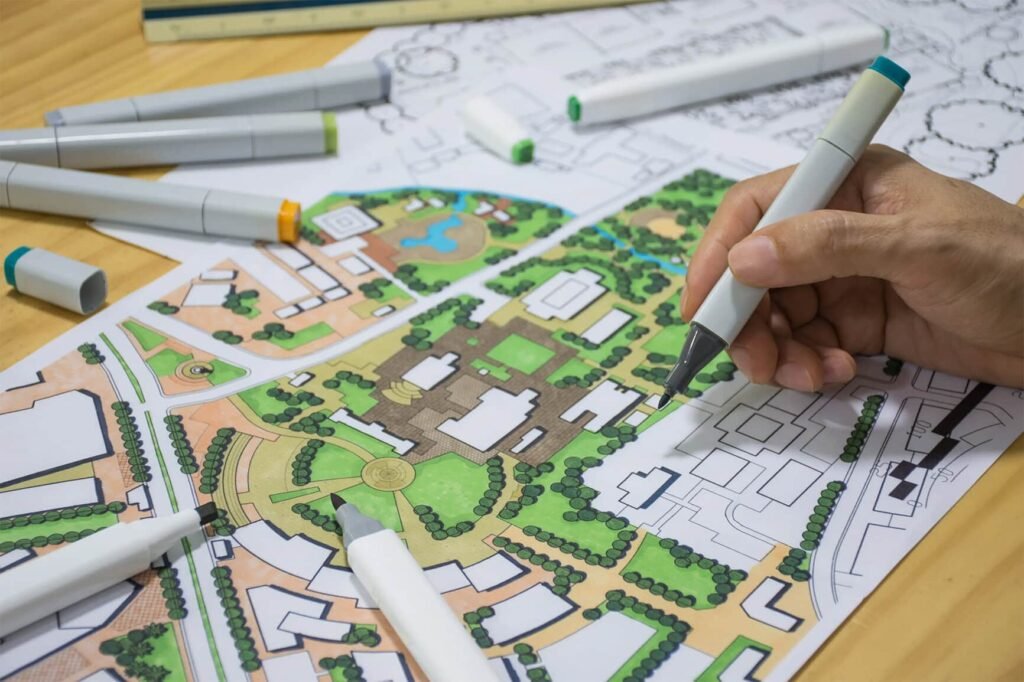

Sustainable urban planning and design have become essential for creating cities that balance growth, environmental stewardship, and quality of life. As populations expand and urban areas continue to grow, planners face the challenge of designing spaces that accommodate people efficiently while minimizing environmental impact. Incorporating sustainability into urban planning not only benefits the environment but also fosters healthier, more resilient, and economically viable communities. Central to this approach are several key principles that guide how cities develop and how house plans, infrastructure, and public spaces are designed.
Integrating Environmental Considerations
Sustainability in urban planning begins with a deep respect for the environment. Cities consume vast amounts of resources, produce significant waste, and affect ecosystems. Planners must consider natural systems, including water cycles, vegetation, and local biodiversity, when designing urban areas. Green spaces, urban forests, and wetlands can be integrated into urban layouts to maintain ecological balance and provide recreational areas for residents. Furthermore, house plans that incorporate energy-efficient design, passive solar heating, and sustainable materials reduce the environmental footprint of individual homes and contribute to broader sustainability goals.
Water management is another crucial aspect of environmentally conscious urban planning. Proper stormwater management systems, rainwater harvesting, and permeable surfaces help prevent flooding, reduce pollution, and conserve water resources. Urban planners are increasingly using smart technologies to monitor and manage water usage, which aligns with the principle of sustainable resource management.
Promoting Compact and Mixed-Use Development
One of the most effective strategies in sustainable urban planning is promoting compact, mixed-use development. By concentrating development in specific areas and integrating residential, commercial, and recreational spaces, cities can reduce urban sprawl, preserve natural landscapes, and minimize transportation needs. This approach encourages walking, cycling, and the use of public transit, reducing reliance on private vehicles and decreasing greenhouse gas emissions.
Designing house plans for compact developments requires thoughtful consideration of space utilization and energy efficiency. Multi-story homes, shared walls, and adaptable layouts can maximize living space while minimizing land use. Planners often collaborate with architects to ensure that these designs maintain aesthetic appeal and functionality, providing comfortable and efficient living environments.
Enhancing Mobility and Accessibility
Sustainable urban planning emphasizes mobility and accessibility for all residents. Cities should be designed to accommodate multiple modes of transportation, including walking, cycling, public transit, and electric vehicles. A well-connected transportation network reduces congestion, improves air quality, and enhances social inclusion by making it easier for people to access work, education, healthcare, and leisure activities.
Urban planners consider the location of house plans in relation to public transport hubs, bike lanes, and pedestrian pathways. By ensuring that residential areas are conveniently connected to services and employment centers, planners can reduce travel times and encourage sustainable commuting habits. Additionally, inclusive design principles ensure that mobility infrastructure accommodates people of all ages and abilities, promoting equity within the urban environment.
Prioritizing Energy Efficiency and Renewable Energy
Energy efficiency is a cornerstone of sustainable urban design. Buildings are among the largest consumers of energy in cities, and inefficient structures contribute significantly to carbon emissions. House plans can incorporate insulation, high-performance windows, energy-efficient lighting, and smart home technologies to reduce energy consumption. Incorporating renewable energy sources, such as solar panels or small wind turbines, further decreases the environmental impact of residential and commercial buildings.
Urban planners also focus on district-level energy strategies, such as combined heat and power systems or community solar projects. These initiatives create more resilient and sustainable energy networks while reducing the reliance on fossil fuels. Integrating energy-efficient building practices with broader urban energy planning ensures that sustainability is achieved at both individual and community scales.
Encouraging Green Infrastructure and Nature-Based Solutions
Green infrastructure, including parks, green roofs, urban gardens, and street trees, plays a vital role in sustainable urban planning. Such elements mitigate urban heat islands, improve air quality, enhance stormwater management, and provide recreational opportunities. House plans that incorporate private gardens, green roofs, or permeable driveways contribute to the city’s overall green infrastructure, creating a more harmonious relationship between built and natural environments.
Nature-based solutions, such as restoring wetlands, preserving riparian zones, and integrating urban forests, offer long-term resilience against climate change and environmental degradation. By prioritizing these solutions, planners can protect biodiversity, enhance ecosystem services, and improve the well-being of urban residents.
Engaging Communities in the Planning Process
Sustainable urban planning is most effective when it involves the community. Engaging residents in the planning process ensures that urban designs reflect local needs, cultural values, and aspirations. Public participation fosters a sense of ownership and responsibility, leading to more sustainable behaviors and better-maintained public spaces.
House plans can also reflect community preferences, offering designs that accommodate multi-generational living, shared amenities, or communal spaces. Participatory design processes allow residents to influence decisions about urban layouts, green spaces, and transportation networks, ensuring that sustainability efforts are socially inclusive and widely supported.
Fostering Resilience and Adaptability
Cities face increasing threats from climate change, natural disasters, and economic uncertainties. Sustainable urban planning emphasizes resilience and adaptability, enabling communities to recover quickly from shocks and continue functioning effectively. This includes designing house plans and urban layouts that are flexible, safe, and capable of accommodating changes in population, climate, and technology.
Resilient design strategies may include elevating structures in flood-prone areas, incorporating modular construction, and using materials that withstand extreme weather conditions. At the city level, planners implement redundancy in transportation, energy, and water systems to ensure continuity of services during crises. By prioritizing resilience, urban areas become more secure, sustainable, and capable of supporting long-term development.
Leveraging Technology and Data-Driven Planning
Modern urban planning increasingly relies on technology and data to enhance sustainability. Geographic information systems (GIS), remote sensing, and simulation models enable planners to assess environmental impact, optimize land use, and predict growth patterns. Smart city technologies, such as intelligent transportation systems and energy monitoring networks, improve efficiency and reduce resource consumption.
House plans and urban layouts benefit from these innovations through energy modeling, daylight analysis, and spatial optimization. Data-driven approaches allow planners to make informed decisions, allocate resources effectively, and measure the success of sustainability initiatives over time.
Balancing Economic, Social, and Environmental Goals
True sustainability in urban planning requires balancing economic viability, social equity, and environmental protection. Cities must provide affordable housing, employment opportunities, and public services while minimizing ecological impact. Integrating sustainable house plans, efficient transportation, green infrastructure, and community engagement ensures that urban development benefits both people and the planet.
Economic incentives, such as tax credits for energy-efficient buildings or funding for green infrastructure projects, can encourage sustainable practices. Simultaneously, policies that promote social inclusion and environmental stewardship create resilient, livable, and attractive cities.
Conclusion
Sustainable urban planning and design are no longer optional; they are essential for creating cities that can thrive in the face of environmental, social, and economic challenges. By integrating environmental considerations, promoting compact and mixed-use development, enhancing mobility, prioritizing energy efficiency, and fostering resilience, planners can build communities that are sustainable, inclusive, and adaptable. House plans play a critical role in this vision, as the design and construction of homes directly impact resource consumption, energy efficiency, and urban aesthetics.