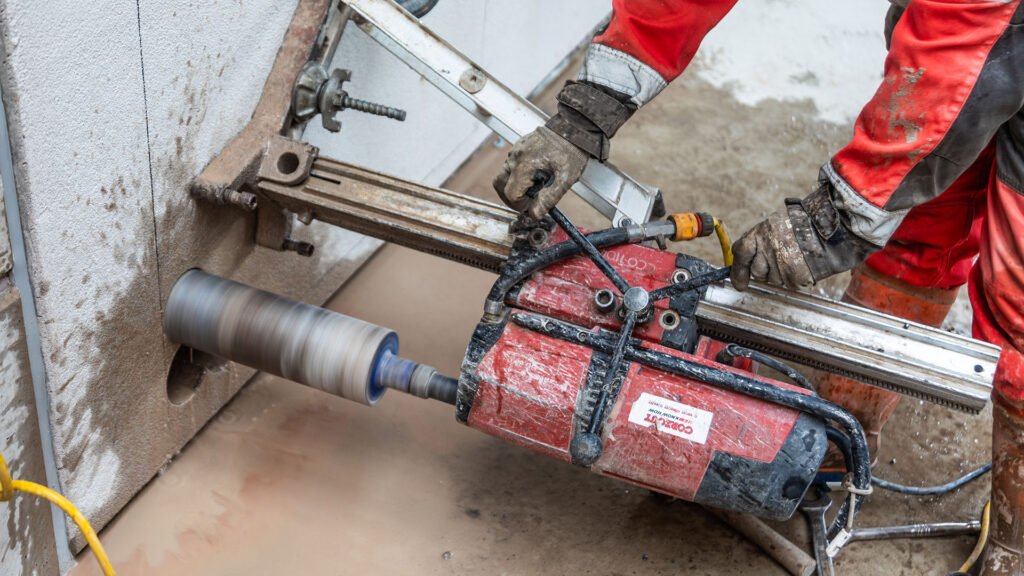

Diamond drilling is a specialized technique used across various industries, from construction and mining to infrastructure development. Recognized for its precision, efficiency, and versatility, diamond drilling has become a go-to method for professionals who require accurate, clean, and reliable drilling results. This guide will explore everything industry professionals need to know about diamond drilling, including its methodology, applications, equipment, safety considerations, and benefits.
What is Diamond Drilling?
Diamond drilling is a method that uses a drill bit embedded with industrial-grade diamonds to cut through hard materials such as concrete, stone, asphalt, and metals. Unlike traditional drilling techniques that rely on friction or mechanical force alone, diamond drilling employs the hardness and sharpness of diamonds to create clean, precise holes with minimal material waste.
The process produces cylindrical cores of material, which can be analyzed in geological applications or removed for structural modifications in construction projects. Diamond drilling is renowned for its ability to drill through extremely tough surfaces without causing cracking, spalling, or excessive vibration.
How Diamond Drilling Works
The core principle behind diamond drilling lies in the hardness of diamonds, which is the hardest natural material known. The drill bit contains a matrix of synthetic or natural diamonds set in metal. As the drill rotates, the diamonds grind the surface of the material, cutting it away layer by layer.
Diamond drilling rigs can be mounted in different ways depending on the project requirements. These include hand-held units for small-scale work, mobile rigs for site flexibility, and large, stationary rigs for heavy-duty industrial operations. Water is typically used as a coolant and lubricant, reducing friction and removing dust and debris from the drilling site.
The technique allows for precise hole diameters and depths, ranging from a few millimeters to several meters, depending on the bit size and drilling rig. The process generates minimal vibration and structural stress, making it ideal for sensitive environments such as hospitals, laboratories, and historical buildings.
Applications of Diamond Drilling
Diamond drilling is a versatile technique employed in several industries. In construction, it is often used for creating openings for plumbing, electrical installations, HVAC systems, and anchor bolts. The clean holes reduce the need for additional finishing work, saving both time and costs.
In mining and geology, diamond drilling is critical for extracting core samples from rock formations. These cores are analyzed to determine mineral content, structural integrity, and geological properties. Accurate sampling is essential for resource evaluation, environmental studies, and engineering projects.
Infrastructure projects, including tunnels, bridges, and roadways, also rely on diamond drilling for precision cutting and coring. Its ability to penetrate reinforced concrete and asphalt without damaging surrounding structures makes it indispensable for urban development.
Industrial applications include cutting and shaping hard metals and composites, as well as creating openings in heavy machinery and equipment. The precision and repeatability of diamond drilling reduce material waste and improve overall project efficiency.
Types of Diamond Drill Bits
There are several types of diamond drill bits designed for specific applications.
- Segmented Diamond Bits: These are used for aggressive cutting in hard materials, offering fast penetration and durability. They are commonly employed in construction and demolition.
- Continuous Rim Bits: These bits provide smooth and precise cuts, ideal for finishing work or drilling tiles, glass, and ceramics.
- Core Bits: Core bits are designed to extract cylindrical cores of material. They are extensively used in mining, geology, and concrete coring applications.
- Vacuum Brazed Bits: These are suitable for fine cutting and finishing tasks, particularly in delicate or brittle materials.
The choice of bit depends on material hardness, drilling depth, and desired hole quality. Industry professionals must match the bit type to the project specifications to achieve optimal results.
Equipment and Technology
Modern diamond drilling relies on advanced equipment designed for efficiency and precision. Hydraulic and electric drilling rigs offer variable speed controls, allowing operators to adjust torque and rotation speed according to material hardness. Portable hand-held drills are perfect for smaller tasks, while large hydraulic rigs handle heavy-duty industrial drilling.
Water supply systems are integrated into most rigs to cool the drill bit and reduce dust. Dry drilling options are also available for materials sensitive to water, using vacuum systems to collect debris. Automated and computer-controlled drilling rigs are increasingly used for large-scale industrial projects, improving accuracy and reducing labor costs.
Safety Considerations
Diamond drilling is generally safer than traditional drilling methods, but safety precautions are still crucial. Operators must wear personal protective equipment, including safety glasses, gloves, ear protection, and respiratory masks. Proper rig setup and secure positioning prevent accidents, particularly when drilling at heights or through thick concrete.
Water management is essential to prevent slips, electrical hazards, and equipment damage. Additionally, monitoring the condition of the diamond bits ensures consistent performance and reduces the risk of bit breakage during operation. Industry standards and local regulations must be followed to maintain workplace safety and compliance.
Benefits of Diamond Drilling
The advantages of diamond drilling make it a preferred choice for professionals across industries.
- Precision: Diamond drilling produces accurate and clean holes, reducing the need for additional finishing.
- Versatility: It can drill through a wide range of materials, including reinforced concrete, stone, asphalt, and metals.
- Minimal Vibration: The process creates less stress on surrounding structures compared to traditional drilling.
- Efficiency: Faster drilling speeds and reduced material waste contribute to lower overall project costs.
- Core Sampling: Diamond drilling allows for the extraction of intact cores, essential for analysis in mining, geology, and construction projects.
For contractors and companies offering professional services, such as Pålidelig professionel diamantboring og diamantskæring i beton entreprenør, diamond drilling provides a reliable solution for both private and commercial projects throughout Denmark, combining quality service with competitive pricing.
Environmental and Cost Considerations
While diamond drilling is highly efficient, it is also environmentally conscious. Using water as a coolant reduces airborne dust, and careful management of drill debris minimizes site contamination. The technique’s precision reduces material wastage, which in turn lowers costs and environmental impact.
Though initial investment in diamond drilling equipment can be high, the long-term benefits—including faster project completion, reduced labor costs, and high-quality results—make it economically viable for professional operators and construction companies.
Choosing the Right Diamond Drilling Service
For businesses and private clients, selecting a professional diamond drilling service is essential to ensure project success. Key factors to consider include experience, equipment quality, safety record, and customer reviews. Service providers should be able to handle a range of projects, from small residential modifications to large industrial or infrastructure works.
Competitive pricing is also important, but it should not compromise the quality of work. Reliable contractors, like those offering service across Denmark, combine expertise, modern equipment, and professional standards to deliver optimal results for every project.
Conclusion
Diamond drilling is a powerful and precise technique that continues to transform construction, mining, and industrial operations. Its ability to create clean, accurate holes in even the toughest materials makes it invaluable for professionals seeking efficiency, reliability, and safety.
By understanding the methods, equipment, applications, and benefits of diamond drilling, industry professionals can make informed decisions for their projects. Whether for core sampling in geological studies, structural modifications in buildings, or precision cutting in industrial settings, diamond drilling stands out as a trusted solution. With professional services offering extensive coverage, attractive pricing, and expert execution, diamond drilling ensures projects are completed with quality and efficiency, meeting the demands of both private and commercial clients in Denmark.
Diamond drilling is more than a technique; it is a professional standard that guarantees precision, safety, and reliability in the modern construction and industrial landscape.