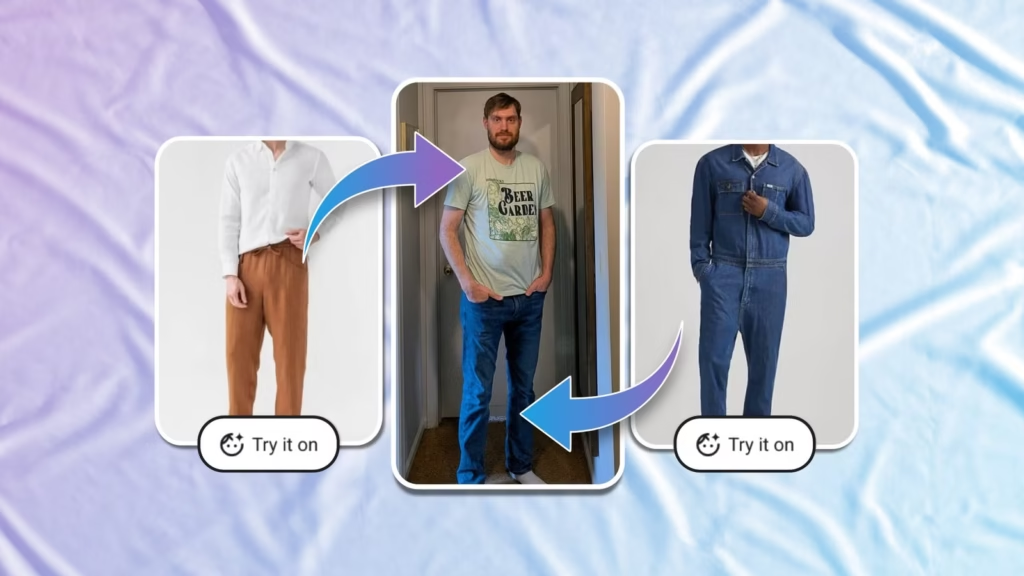

The world of online shopping has evolved dramatically in recent years, with technology playing a pivotal role in transforming how consumers interact with fashion. One of the most exciting advancements in this domain is AI clothes try on, a solution that allows shoppers to virtually try on outfits from the comfort of their homes. This technology has revolutionized the online shopping experience, bridging the gap between physical and digital retail while providing convenience, personalization, and confidence in purchasing decisions.
Understanding AI Clothes Try-On Technology
AI clothes try on uses advanced artificial intelligence algorithms, computer vision, and augmented reality to simulate how clothing would look on an individual without physically wearing it. The technology typically relies on a combination of 3D modeling, body scanning, and deep learning techniques to create accurate representations of garments. Users can see how clothes fit, drape, and match with other items in real time. Retailers integrate this technology into their websites or mobile apps, providing a seamless and interactive shopping journey.
The Role of Artificial Intelligence in Virtual Try-On
Artificial intelligence is at the heart of AI clothes try on solutions. Machine learning algorithms analyze user data, including body measurements, posture, and style preferences, to generate realistic clothing simulations. By learning from millions of images and user interactions, AI can predict how a particular piece of clothing will fit different body types. This predictive capability ensures that virtual try-ons are highly accurate, reducing the chances of dissatisfaction after delivery. AI also enhances the experience by recommending complementary items and personalized outfit suggestions, making the shopping process more engaging and tailored.
Benefits of AI Clothes Try-On for Consumers
One of the primary advantages of AI clothes try on is convenience. Shoppers can explore a wide range of outfits without leaving their homes, avoiding the time-consuming process of visiting multiple stores. The technology also boosts confidence in purchasing decisions. Seeing a virtual representation of how a dress, jacket, or pair of pants fits reduces uncertainty about sizing and style. This feature is particularly valuable for online shoppers who often struggle with inconsistencies in sizing across different brands. Additionally, AI clothes try on supports sustainability by encouraging smarter purchasing choices. Shoppers are less likely to buy multiple sizes or unnecessary items, minimizing returns and reducing waste.
Enhancing Personalization Through Virtual Fitting
Personalization is a key trend in modern retail, and AI clothes try on excels in this area. By analyzing past purchases, browsing history, and user preferences, AI can recommend outfits that align with individual tastes. Some platforms allow users to customize avatars with their exact body dimensions, ensuring that the virtual try-on experience reflects their real-world appearance. This level of personalization not only improves customer satisfaction but also strengthens brand loyalty, as shoppers feel that the retailer understands and caters to their unique style.
Impact on Retailers and the Fashion Industry
For retailers, AI clothes try on offers significant advantages beyond improving the customer experience. Virtual try-on solutions reduce the likelihood of returns, which are a major challenge for e-commerce businesses. High return rates often result in financial losses, logistical issues, and environmental concerns due to transportation and discarded products. By providing a more accurate representation of fit and style, AI clothes try on helps mitigate these problems. Furthermore, it allows brands to showcase new collections and experiment with virtual fashion shows or digital showrooms, reaching global audiences without the constraints of physical stores.
Challenges and Limitations of AI Clothes Try-On
Despite its benefits, AI clothes try on technology faces several challenges. One major limitation is the accuracy of virtual simulations. While AI has made impressive strides, perfectly replicating the texture, stretch, and drape of fabrics remains complex. Lighting conditions, camera quality, and individual body variations can affect the realism of virtual try-ons. Another challenge is user adoption. Some consumers may be hesitant to embrace virtual fitting due to privacy concerns or unfamiliarity with the technology. Ensuring secure data handling and providing intuitive, user-friendly interfaces are essential for overcoming these barriers.
Future Trends in AI Clothes Try-On
The future of AI clothes try on looks promising, with ongoing innovations set to enhance virtual shopping experiences even further. Integration with augmented reality glasses and smart mirrors could allow shoppers to see virtual clothing overlaid onto their reflection in real time. AI-powered chatbots and virtual stylists may guide users through outfit selection, providing expert fashion advice personalized to their preferences. Additionally, advancements in fabric simulation and 3D modeling will make virtual try-ons even more realistic, closely mimicking the look and feel of real garments. As technology continues to evolve, AI clothes try on is poised to become an integral part of everyday shopping, merging convenience with a high level of interactivity and engagement.
Conclusion
AI clothes try on is transforming the fashion industry by offering an innovative, interactive, and personalized shopping experience. For consumers, it provides convenience, confidence, and a sustainable approach to purchasing, while for retailers, it reduces returns, enhances customer engagement, and opens up new avenues for digital marketing. Despite certain challenges in accuracy and adoption, the potential of AI-driven virtual fitting solutions is immense. As technology continues to advance, AI clothes try on is set to redefine how we shop for fashion, making online experiences more immersive, efficient, and enjoyable than ever before.